
Orchestra Baobab’s Made in Senegal, released on 23 October 2026, places a longstanding Senegalese ensemble back in the conversation about new African music. It is the group’s first studio album since 2017’s Tribute to Ndiouga Dieng. Eleven days into its release, the useful question is how a collective carries its identity forward when the people making the music change.
This is analysis of a recent release, not an announcement of a new album today or a claim to have attended a recording session. Production information and independent criticism point towards a distinctive story of continuity: an ensemble renewing its membership while continuing to make new work.
### Dakar as a place of production
Madoky Music’s release dossier identifies La Boutique studio in Dakar as the recording location. It describes a twelve-track record made by nine musicians, without guest performers, produced by Madoky and licensed to Strut Records internationally.
That division of roles is worth noticing. The recording’s connection to Senegal is a matter of where the work was made and who produced it, alongside the international route through which listeners can encounter it.
For African-origin audiences abroad, this offers a more specific account than a promotional claim that music has “gone global”. Local production and international distribution can be parts of the same project. They need not imply that artistic development starts only when a foreign partner becomes involved.
### Renewal within the ensemble
Strut’s album notes identify a line-up combining experienced players with newer participants. Saxophonist and bandleader Thierno Koité is joined by musicians including vocalists Zacharia “Papino” Koité and Korka Dieng. Strut describes Dieng as the band’s first female frontwoman.
The release includes new material and versions of earlier songs. Strut identifies Togne Bakhoul with the late songwriter Rudy Gomis, while Tioro Bye Samba revisits a Thione Seck composition. Those credits make the relationship between inheritance and present performance visible.
Succession in a band is a practical artistic problem. Retaining a name does not automatically retain a sound; replacing every familiar element may remove what audiences valued. An ensemble has to make choices about repertoire, roles and the space available to musicians who did not create its earliest recordings.
### What independent critics heard
In a 23 October review for musicOMH, Chris White emphasises the continuity of the group’s rhythmic and instrumental character despite its changing membership. His account highlights Casamance and Sibo Odia, directing attention towards the interplay between voice, guitar and horns.
Silent Radio’s Andrew Neal, writing on 21 October, similarly considers how personnel changes have been absorbed. His review draws particular attention to Dieng’s role and the combination of new songs with reworked material.
These are attributed critical judgements, rather than measurable statements about the album’s commercial success. Neither review establishes sales, streaming totals or a wider audience breakthrough.
A 27 October Bandcamp Daily piece by Marshall Gu places the record within the band’s longer relationship with Senegalese traditions, jazz and Cuban rhythms. Read together, the criticism offers several listening routes without requiring readers to accept a single verdict.
### Heritage as continuing work
The wider lesson for African creative organisations is that preservation can involve making things, as well as archiving them. Repertoire needs performers; arrangements need rehearsal; an ensemble’s identity has to be negotiated through working relationships.
There is also a difference between introducing a new listener to a catalogue and selling an established name through nostalgia. A current release gives audiences something contemporary to discuss alongside the history. Its credits can introduce musicians whose contributions might otherwise disappear behind the collective’s reputation.
RIM’s discussion of African stories and international screens approaches a related question in film: how a work travels while retaining the specificity of its origins. Here, the production credits offer a concrete starting point.
Made in Senegal is available through the release’s official channels in physical and digital formats. Its immediate significance is the work itself and the musicians carrying it forward, rather than an unverified claim about rankings or renewed stardom.
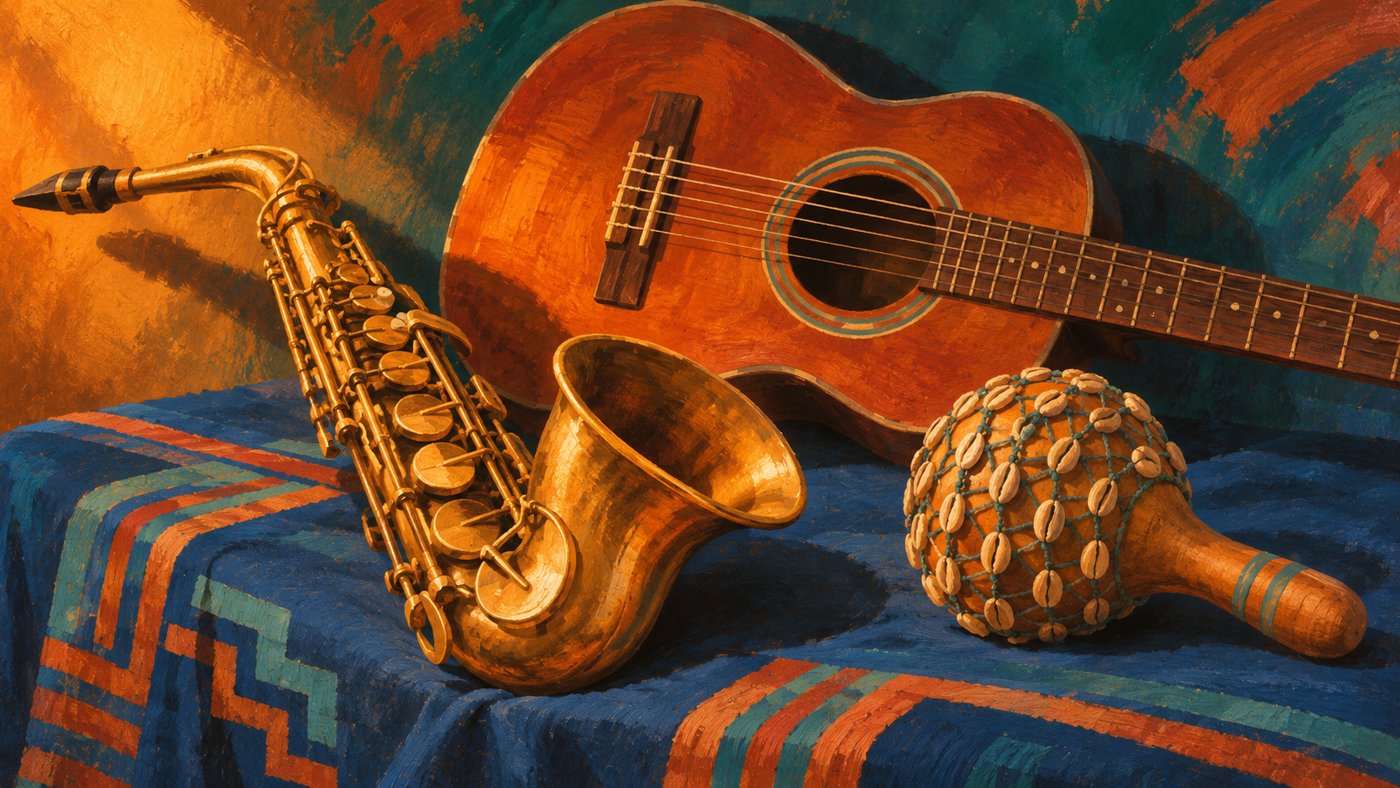
*Illustration: unbranded instruments in an imagined studio setting; not Orchestra Baobab, their equipment or the album artwork.*
Why this matters
African musical heritage needs living practitioners as well as a celebrated archive. Orchestra Baobab’s recent release makes succession visible through its musicians, repertoire and production credits. For diaspora listeners it offers a route into both new work and a longer catalogue. For creative organisations, the relevant lesson is how continuity can make room for new contributors. Critical attention is encouraging context, but should remain distinct from verified commercial outcomes.
Sources
- Madoky Music: Made in Sénégal production dossier
- Strut Records: Made in Senegal release and credits
- musicOMH: Chris White's review, 23 October 2026
- Silent Radio: Andrew Neal's review, 21 October 2026
- Bandcamp Daily: Marshall Gu's album feature, 27 October 2026
Topics: Senegal · Orchestra Baobab · Made in Senegal · African music · Music heritage · Dakar
← All news & insights