
Tobago’s October Carnival is under way, with the island’s official tourism calendar listing the main celebration for 30 October to 1 November 2026. Beyond the costumes and visitor programme, this week has brought renewed attention to the musical traditions through which Tobago tells its own story.
The Tobago Tourism Agency’s festival information places the event within a wider calendar of cultural activity. Two developments reported before the weekend give that setting particular significance: formal recognition of tambrin music and another title for one of the island’s leading calypso performers.
Recognition for an established sound
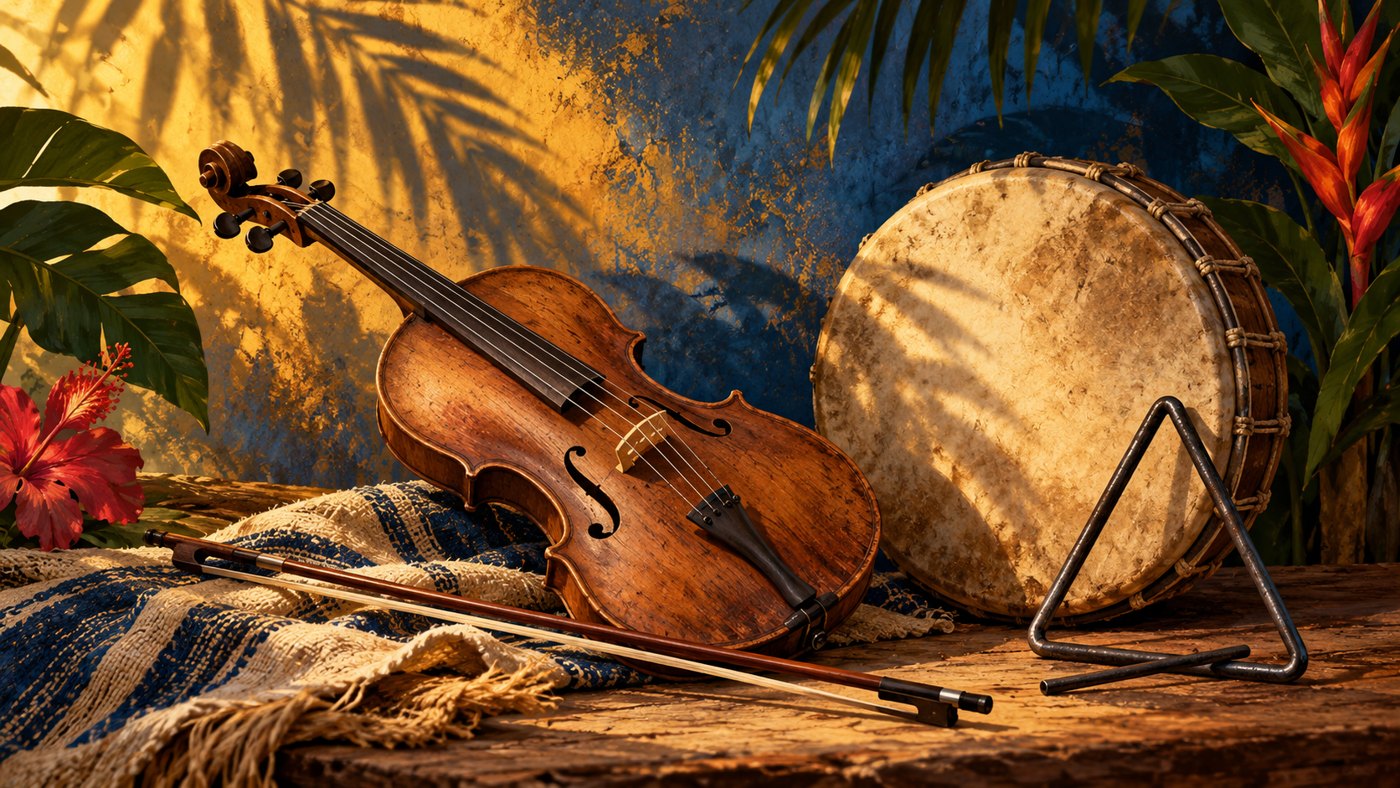
TTT News reported on 27 October that the Tobago House of Assembly had declared the tambrin its official musical instrument and the fiddle-and-tambrin ensemble the island’s official sound.
The account identifies a motion moved by Secretary of Tourism, Antiquities and Creative Industries Zorisha Hackett. Her explanation emphasised the different rhythmic functions within the ensemble and the role of the fiddle in supplying melody. The recognition concerns an existing community tradition, not the creation of a new musical style.
TTT also reports an intention to bring the tradition into schools and community activity. That proposed follow-through matters: a declaration can give public recognition, while continued teaching and performance determine whether knowledge is passed to another generation.
Calypso’s competitive and critical voice
In a separate report on 28 October, TTT records Nicole Thomas-Clarke’s third consecutive Tobago Calypso Monarch victory. The competition took place on Tuesday, 27 October, at Market Square in Scarborough, with ten contestants.
Thomas-Clarke won with Respect. TTT places Wendy Garrick second with Borrowed Time and Chevelle Williams third with All Hands on Deck. Its coverage describes performances engaging with social issues, a reminder that calypso can be a vehicle for argument and reflection as well as celebration.
The result belongs to the earlier competition, not an event taking place this morning. The Carnival weekend is the current setting in which those achievements and conversations are being carried forward.
An island should not disappear inside a national label
RIM’s analysis is that the week’s developments illustrate why cultural reporting needs specificity. Trinidad and Tobago is one country, but an account that treats every island tradition as interchangeable can lose the detail that makes a performance meaningful.
Naming the instrument, ensemble, performer and place gives audiences something more useful than a generic description of Caribbean rhythm. It also allows people outside the region to recognise connections without assuming that all Caribbean cultures share an identical history.
That precision is relevant to diaspora audiences. A festival can be an occasion for belonging, but belonging often rests on particular sounds, memories and practices rather than broad geographical labels. Contemporary performance and inherited tradition can occupy the same programme without one having to replace the other.
From a weekend audience to a continuing practice
The commercial attention around Carnival can create openings for performers, event workers and cultural organisations. It does not automatically establish that every practitioner benefits. Understanding those outcomes would require evidence about participation, payment and sustained opportunities after the visitors leave.
For media producers, the corresponding responsibility is to represent contributors accurately and agree how performances or recordings may be used. An attractive musical backdrop is not a substitute for acknowledging the people who sustain the practice.
RIM’s coverage of Saint Lucia’s Kwéyòl language and younger generations explores a related question in a different Caribbean setting: how cultural expression remains active beyond a commemorative day.
What visitors and distant audiences can follow
Anyone attending should check the current official programme for specific venues and access arrangements. The overall Carnival dates do not establish admission to every individual activity, and the tourism calendar includes events with different formats.
For people following from abroad, the most valuable coverage may explain the music as well as show the spectacle. Tobago’s recognition of tambrin and its recent calypso competition offer clear starting points. The weekend can attract attention; the longer story is how that attention supports listening, learning and continued cultural participation.
Why this matters
Tobago’s Carnival links a contemporary visitor event with specific local music and community knowledge. The official recognition of tambrin and the reported calypso result help readers understand what distinguishes the island’s cultural voice. For the African diaspora, that specificity supports richer connections to Caribbean heritage. Lasting benefits will depend on participation and support beyond the Carnival weekend, not recognition alone.
Sources
- Tobago Tourism Agency — Official festival calendar and October Carnival dates
- TTT News — Tambrin and fiddle ensemble recognition, 27 October 2026
- TTT News — Nicole Thomas-Clarke’s third Calypso Monarch title, 28 October 2026
Topics: Tobago · Caribbean music · Carnival · Calypso · Cultural heritage
← All news & insights