
Six refugee athletes are preparing for the first Refugee Olympic Team appearance at a Youth Olympic Games, UNHCR confirmed on 30 October. The update brings a distinct human story into focus as Dakar 2026 reaches its official opening day on 31 October.
The team comprises three young women and three young men, all based in Africa. UNHCR’s statement on 30 October confirms that they are preparing to compete in athletics, judo and taekwondo during the Games, which run until 13 November.
An earlier IOC account of their Kenyan training camp describes conditioning work, team briefings and media training. It says the camp brought together athletes normally spread across Kenya and Uganda, giving them time to prepare as a team before competing internationally.
A leader who knows the journey
Yiech Pur Biel is the team’s chef de mission. He competed at Rio 2016 as part of the inaugural Refugee Olympic Team and now takes on a leadership role with a younger generation.
In BBC Newsbeat’s original interview published on 30 October, Biel describes rebuilding his life after displacement from South Sudan and growing up in Kenya’s Kakuma refugee camp. The account places education, friendship and his discovery of running alongside the sporting milestone.
That history matters because it gives his present role a personal foundation. It should not be treated as a template that every teammate must fit. Each athlete has an individual background, discipline and ambition.
The BBC also profiles judoka Arno Yafunga Botay, who lived in Kakuma after fleeing the Democratic Republic of Congo. It reports his hope of returning with a gold medal and sharing the value of judo with others. That is his ambition ahead of competition, rather than a prediction about the result.
Kenya and Uganda’s role
The IOC’s team announcement identifies Kenya and Uganda as the host National Olympic Committees. Four athletes are based in Kenya and two in Uganda.
The published roster assigns Arno to men’s judo; Clement and Nyataba to the men’s and women’s 800 metres; Florence and Rachid to the women’s and men’s 200 metres; and Lourance to women’s taekwondo. The official list provides first names, which are used here without inventing additional personal details.
The IOC also connects the Ugandan selection pathway to Game Connect, a community programme supported by the Olympic Refuge Foundation. That link is significant: it shows an identified route from organised community activity towards elite sporting opportunity.
It does not establish that participation in any community programme guarantees international selection. Competitive standards, support arrangements and the circumstances of individual athletes remain important.
Support around the competition
UNHCR says the Olympic Refuge Foundation manages the team, with support from sporting bodies and the agency. It also identifies Eliud Kipchoge as a mentor to the athletes. The statement calls for young refugees’ access to sport and education to continue beyond the closing ceremony.
That appeal gives readers a practical way to assess the wider significance. A medal is a visible outcome, but regular coaching, safe facilities and continued learning are also meaningful parts of participation.
For diaspora audiences, following these competitors can expand the familiar national-team framework. Their sporting identities are not exhausted by a flag, a place of birth or the circumstances that forced them to move.
Following the next chapter
RIM’s earlier Dakar 2026 preview explains the wider programme and the distinction between the Youth Games and the senior Olympics. This report adds the team’s final preparations and the renewed call for support as the opening approaches.
The next reporting task is to follow actual performances and the athletes’ own accounts. Coverage should give their sport the same precision afforded to other competitors: the discipline, the result and the conditions around preparation.
Recognition can be valuable without making six teenagers responsible for representing every displaced person’s experience. Dakar offers them a competitive stage. What they do there deserves attention on its own terms, alongside scrutiny of whether opportunities remain available afterwards.
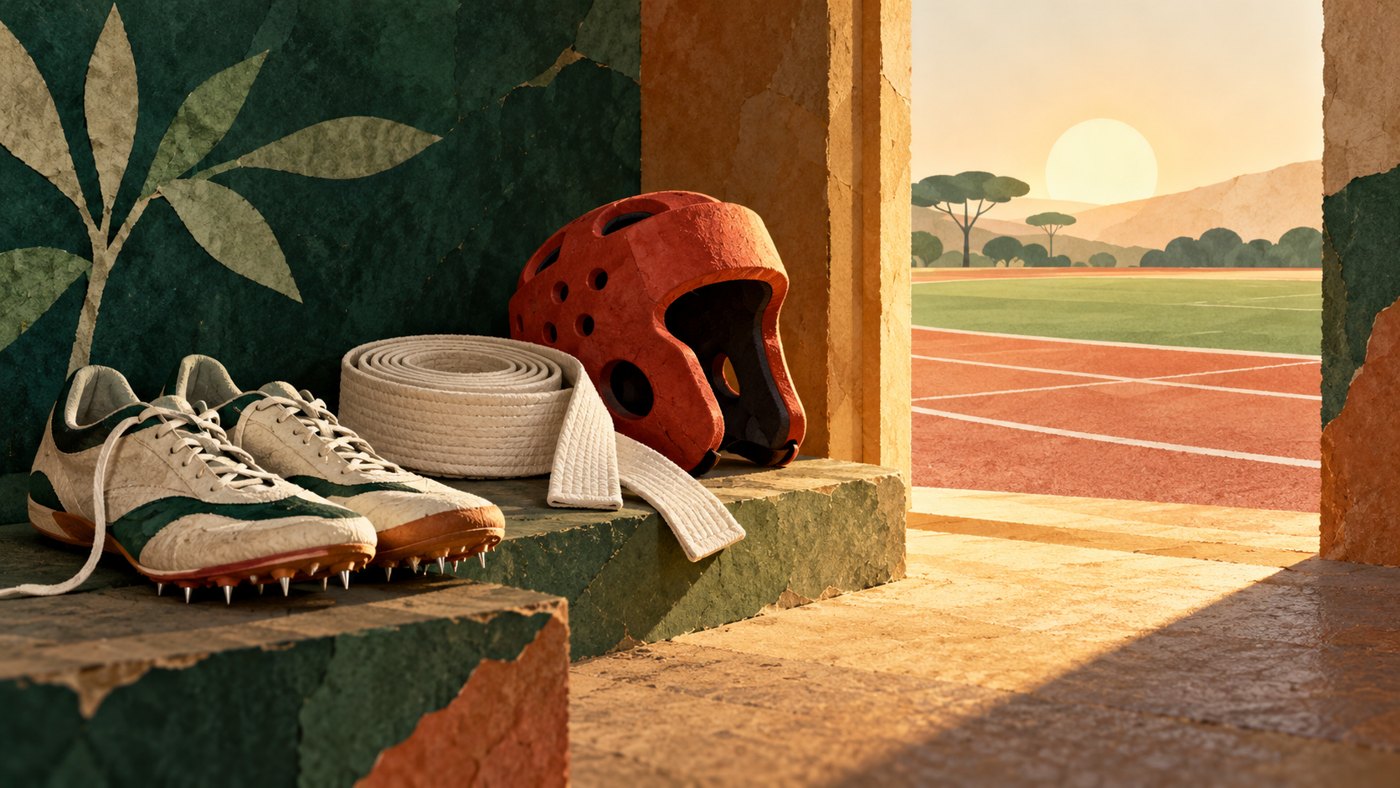
*Featured image: AI-generated conceptual illustration of sporting equipment; it shows no actual athlete, refugee settlement or Dakar venue.*
Why this matters
The team connects sporting opportunity in Kenya and Uganda with a global stage hosted in Senegal. Its significance includes the community and coaching pathways that made selection possible. For African and diaspora readers, careful coverage can recognise displacement while treating the competitors as individual athletes, with ambitions and results of their own.
Sources
- UNHCR, 30 October 2026 — team preparation and support
- BBC Newsbeat, Lizzy Bella, 30 October 2026 — original interview with Yiech Pur Biel
- IOC — official six-athlete team announcement and selection pathways
- IOC, 11 September 2026 — training camp, teamwork and mentoring background
Topics: Dakar 2026 · Refugee athletes · Senegal · Kenya · Uganda · Youth sport
← All news & insights