
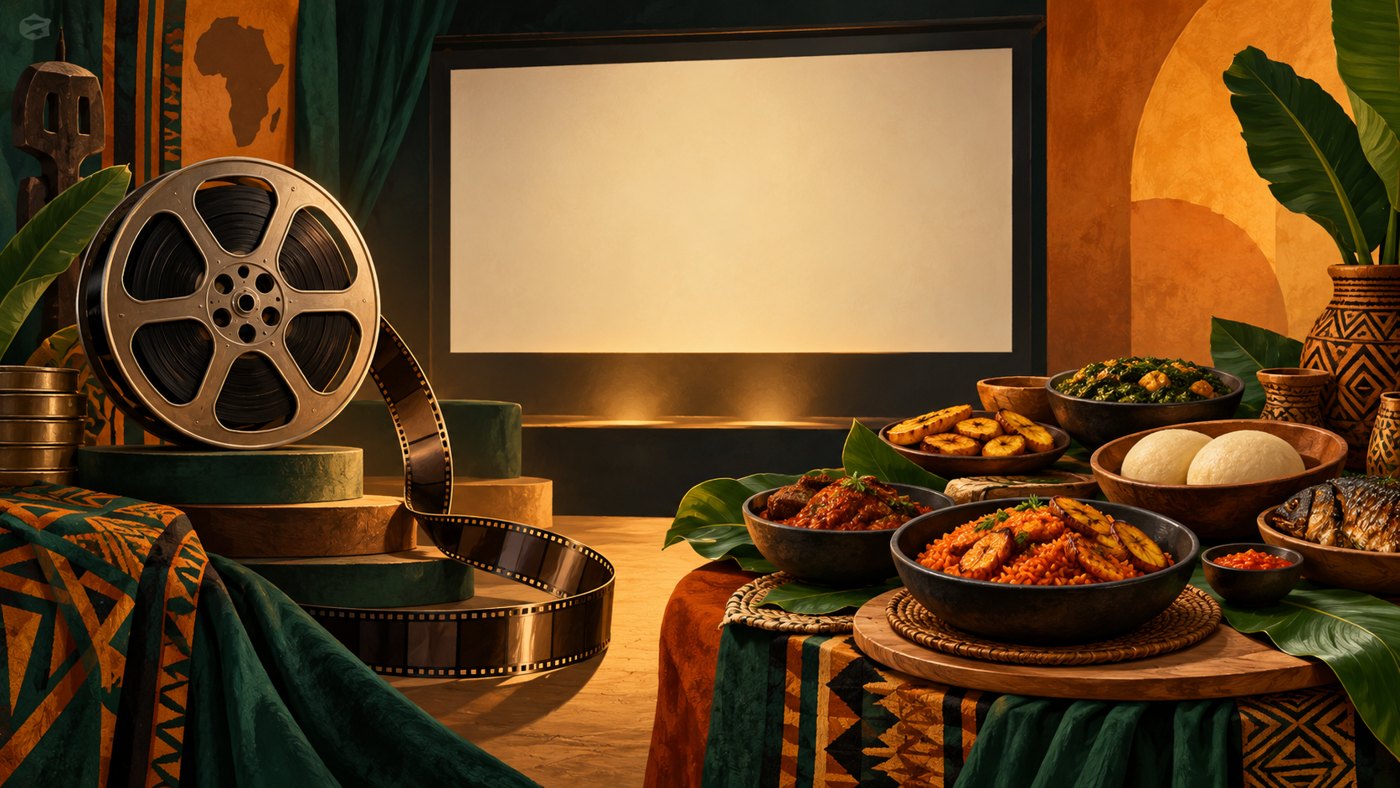
A newly launched festival in Accra is proposing that African cinema, food and tourism should share more than a promotional stage. The Nollywood–Africa in Diaspora Film & Food Festival and Awards, known as NADFFA, is presenting them as connected routes to cultural exchange and creative business.
Graphic Online’s report of 30 October places the corporate and media launch on 29 October 2026 at the W.E.B. Du Bois Centre in Cantonments. The organisers’ stated ambition is to strengthen connections between Ghana, Nigeria and African communities abroad. A launch establishes that ambition publicly; the test will be how the programme serves filmmakers, participating businesses and audiences.
What has been announced
According to Graphic, the proposed public festival dates are 12 and 13 March 2027 at the State House forecourt in Accra. The announced programme combines screenings with food exhibitions, learning activities, cultural presentations and professional networking. A separate finale and awards event is planned for 14 March at the Mövenpick Ambassador Hotel.
Those are the arrangements reported at the launch, rather than an independently audited delivery plan. Readers considering participation should confirm the relevant programme, access conditions and booking route with the organisers before committing money or travel.
The project also has an earlier public history. Ghana Weekend reported on 15 July that Ramatu Gumah had taken a diaspora leadership and ambassadorial role. Its account described a concept bringing film together with food, music, fashion and culture. That July article supplies background; it is not separate confirmation of October’s detailed schedule.
Why food can change the audience conversation
RIM’s analysis is that a programme combining different cultural experiences can reach people who would not necessarily choose a specialist film event. A visitor drawn by cuisine may encounter a story, language or filmmaker for the first time. A film audience may discover the people and businesses sustaining an associated cultural practice.
The opportunity depends on thoughtful programming. Simply putting several activities at the same venue does not guarantee that audiences move between them. Screenings need suitable sound, visibility and time for concentration. Food traders need space and a workable service flow. A programme should help those needs coexist.
That makes the practical design as important as the launch message. RIM’s guide to planning an African film screening starts with the intended audience and experience. The same discipline is relevant to a combined festival: decide who each activity is for, then establish how visitors discover and access it.
Collaboration needs more than introductions
For filmmakers, an international gathering becomes useful when a meeting leads to a specific next step. That might be a discussion about a screening, a clearer production brief or an exchange with a prospective collaborator. It should not be confused with an automatically secured financing or distribution agreement.
Ghana–Nigeria collaboration can take different forms, and each requires clarity about contributions and responsibilities. A cultural event can open the conversation, while the actual project still needs an appropriate agreement. The launch report does not establish completed deals or confirmed acquisitions.
Diaspora participation should also be treated as more than a label on publicity. People living abroad may want accessible information about films, languages, participation and the purpose of the programme. Their interests will not necessarily be identical, even where they share a connection to Africa.
What to watch between now and March
The next substantive developments would be a detailed screening selection, clear participation information and an explanation of how the professional programme will operate. These would help distinguish opportunities for audiences from opportunities for businesses or invited delegates.
A new festival does not need to promise every possible outcome to be valuable. Its contribution could be a well-curated encounter that brings people into a productive conversation. NADFFA’s launch makes that proposition visible; the months ahead will show how the organisers translate it into an event people can use.
Why this matters
For African and diaspora filmmakers, finding audiences can involve cultural spaces beyond conventional cinema releases. NADFFA’s announced combination of screenings, food and professional exchange is relevant to that challenge. Its value will depend on programming, access and follow-through rather than the breadth of its launch claims. RIM has no announced role in the festival; this is independent reporting and analysis of its proposed model.
Sources
- Graphic Online — NADFFA corporate and media launch, reported 30 October 2026
- Ghana Weekend — Ramatu Gumah’s festival role, 15 July 2026; background
Topics: African cinema · Ghana · Nigeria · Diaspora · Film festivals
← All news & insights