
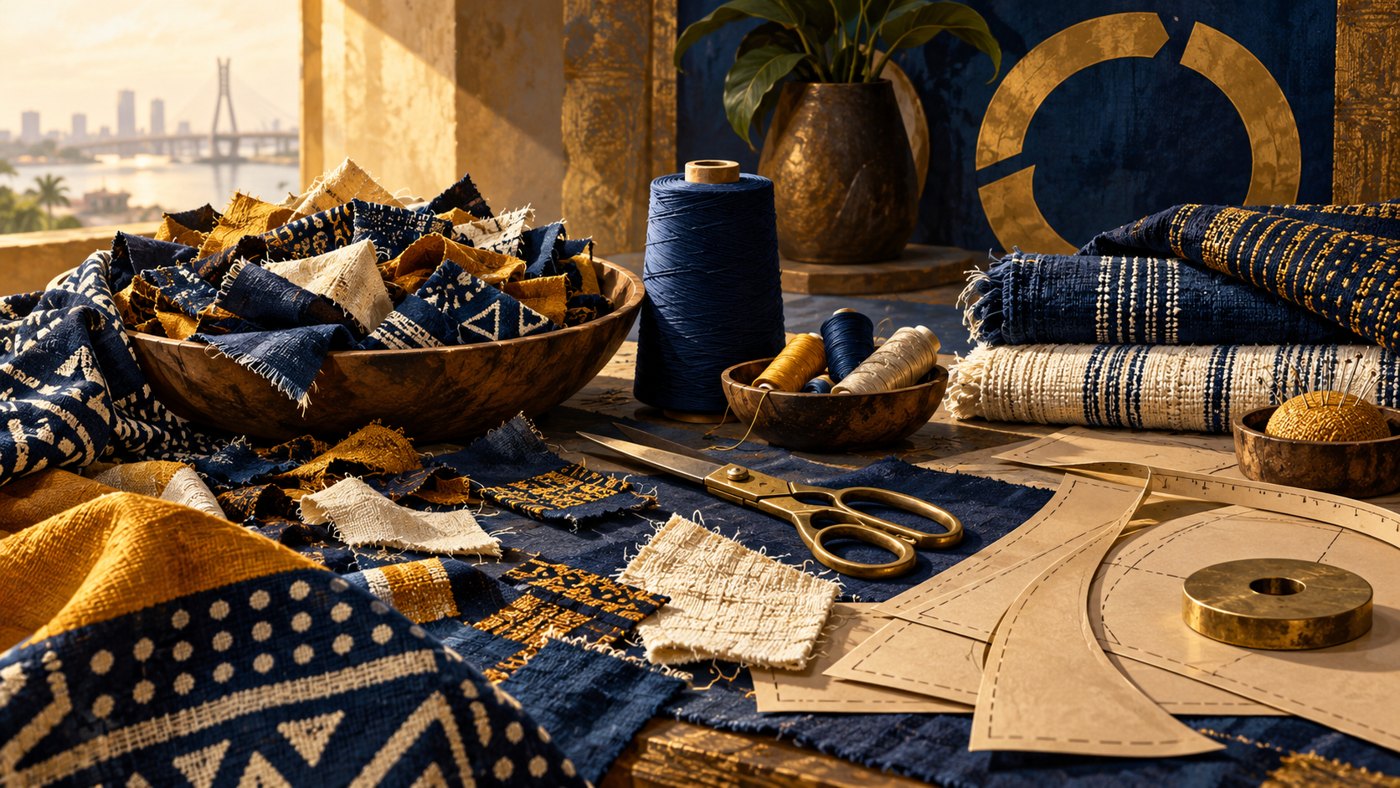
Lagos Fashion Week’s 2026 edition is presenting African design as both a cultural force and an industry with unfinished business. The organiser’s official programme runs from 28 October to 1 November, placing shows alongside retail activity, showrooms and business discussions.
In reporting published on 30 October, Africanews describes the event’s fifteenth edition and its Crafted theme. The coverage connects the work on display with a larger question: how African creators can retain more of the benefits generated by their ideas and skills.
A declaration beyond the runway
The organiser has published The Blueprint for a Regenerative Fashion Future, framed as an African fashion collective declaration. Its central argument is that the continent’s existing practices of making, repair and resourcefulness should help shape the industry’s future.
The declaration calls for supply chains that benefit makers and keep more value in Africa. That is an advocacy position and a proposed direction, not independent proof that the industry has already achieved those outcomes. This article does not treat signing the declaration as certification of any individual business.
Its significance is the shift in what success is being discussed. A celebrated collection can gain international attention while the people and workshops behind it remain commercially vulnerable. The declaration asks the industry to consider ownership and production conditions alongside visibility.
The programme makes the commercial question tangible
The published schedule includes buyer-facing showrooms and retail activity, as well as sessions addressing business models and the economics of fashion. Some activities are invitation-only. Visitors should check the organiser’s current access arrangements rather than assuming that a general interest in the event provides entry to every session.
A scheduled discussion on 31 October brings capital, craft and commerce into the same conversation. It is a useful indication of the programme’s priorities, but a discussion is not evidence of completed investment or guaranteed orders.
That distinction matters when reporting creative-industry gatherings. Meetings may create an opening; the lasting value depends on what is agreed, delivered and paid for after the event.
RIM analysis: visibility needs a route to income
For an emerging label, a strong image can introduce a distinctive point of view. Converting that attention into sustainable work raises different questions. Can a buyer obtain accurate product information? Are production quantities realistic? Can delivery expectations be met without placing unreasonable pressure on makers?
These are analytical questions, not findings about any named designer at this event. They illustrate why commercial preparation belongs beside creative presentation. International demand is useful only if a business can serve it on workable terms.
The same logic applies to the story told about a garment. A compelling account of craftsmanship should identify the people and processes involved accurately. Broad claims about sustainability are less informative than specific explanations of materials, making and intended use.
Images, music and storytelling also carry value
Fashion creates work for photographers, filmmakers, stylists and music professionals. That makes the conversation relevant beyond clothing. A campaign or show recording can circulate far beyond its original setting, so the creative brief should consider how contributors’ work may be used.
RIM’s film and music consultancy describes support with creative planning and collaboration. For a fashion project, the corresponding discipline is to align the visual idea, intended audience, production resources and agreed use of the finished material. This is a planning principle, not a claim of a RIM partnership with Lagos Fashion Week.
What to watch after the final show
The meaningful follow-through will be found in relationships and practices that survive the event: sustained buyer conversations, clearer production arrangements and credible accounts of how makers benefit.
Publicity alone cannot verify those changes. Equally, the absence of an immediate headline deal does not mean that a useful professional connection has failed. The right question is whether the next step is specific and achievable.
As this edition continues, Lagos offers a timely setting for that examination. African fashion’s international visibility is important; the more demanding ambition is to build an industry in which the people creating the value can participate fully in its rewards.
Why this matters
Fashion is part of a wider African creative economy linking craft, photography, film, music and international trade. Lagos Fashion Week’s programme and declaration make value retention a concrete editorial question. For diaspora buyers and collaborators, the useful response is to look beyond attractive images and ask about production capacity, contributor recognition and delivery. The manifesto states an ambition; its implementation needs evidence over time.
Sources
- Lagos Fashion Week — Official 2026 event programme, 28 October–1 November
- Lagos Fashion Week — Blueprint for a Regenerative Fashion Future declaration
- Africanews — Lagos Fashion Week’s fifteenth edition and sustainability, 30 October 2026
Topics: Lagos Fashion Week · Nigeria · African fashion · Creative economy · Sustainability
← All news & insights