
The Lagos Biennial is preparing to open its fifth edition to the public on 14 November, bringing contemporary art and a debate about cultural memory to Eko Atlantic City. Under the title *The Museum of Things Unseen*, the programme asks audiences to consider how institutions decide what becomes visible and what remains outside the frame.
Fresh reporting by Punch on 31 October describes an exhibition involving more than 70 artists, running on selected dates until 6 December. That schedule matters: the overall date range should not be read as a promise that every exhibition or activity is available every day.
The organisers’ current public programme distinguishes the 13 November press and private previews from the public opening at noon on 14 November. Readers planning a visit should check the official timetable and entry arrangements before travelling. A preview invitation and ordinary public access are different things.
A museum as a question
The curators are Furen Dai, Chinyere Obieze and Sam Hopkins, working under artistic director Folakunle Oshun. In their published curatorial statement, they describe an inquiry into the forces that shape which artworks are seen, preserved and discussed.
Their argument reaches beyond the physical act of displaying an object. It includes the influence of money, curatorial choices and institutional histories. These are the organisers’ stated ambitions; whether individual works communicate them successfully will be a question for visitors and critics after the exhibition opens.
For African and diaspora audiences, that distinction creates room for a useful conversation. Visibility can mean an artwork entering a major exhibition, but it can also mean a viewer gaining enough context to understand why it matters. A prominent platform and a meaningful encounter are connected, yet neither guarantees the other.
Film enters the conversation
The official programme includes a 15 November screening of Abba T. Makama’s *The Lost Okoroshi*, followed by a conversation with the director and audience questions. It also lists talks and guided visits, bringing different ways of encountering art into the opening weekend.
That film component is relevant to RIM’s readers because a screening can create a different relationship with cultural material from a static display. A shared running time, followed by discussion, gives audiences a chance to compare interpretations and ask how a story was made.
This is an editorial reading of the format, rather than a review of the planned session. The programme may change. Readers interested in the practical relationship between films, venues and audiences can also explore RIM’s guide to planning an African film screening.
Beyond the temporary exhibition
A further focus is the Àkéte Collection. The organisers’ collection statement describes a longer-term ambition for a permanent cultural space, drawing on works from previous editions alongside acquisitions, donations and loans. Its first major exhibition is planned within the 2026 Biennial.
That ambition should be assessed separately from the temporary event. Announcing a collection does not, by itself, establish how regularly people will be able to visit, how research access will operate or how conservation will be sustained.
These are useful questions for future reporting. A durable cultural institution needs arrangements for care and interpretation as well as an inaugural display. Public information about those arrangements can help audiences understand what a permanent collection will offer over time.
Access will shape the outcome
Lagos’s changing built environment provides a significant setting for a project concerned with memory. Yet the strength of the exhibition’s questions will also depend on ordinary visitor experiences: clear directions, understandable information and opportunities to engage with the work.
RIM’s analysis is that those practical details deserve attention alongside international participation. An event can stimulate professional exchange while still needing to explain its purpose clearly to someone entering a contemporary art exhibition for the first time.
The November programme offers several routes into that conversation, from film to curatorial discussion. The next step is the public encounter itself. Until then, the Biennial’s claims remain proposals to explore, rather than achievements that can already be declared.
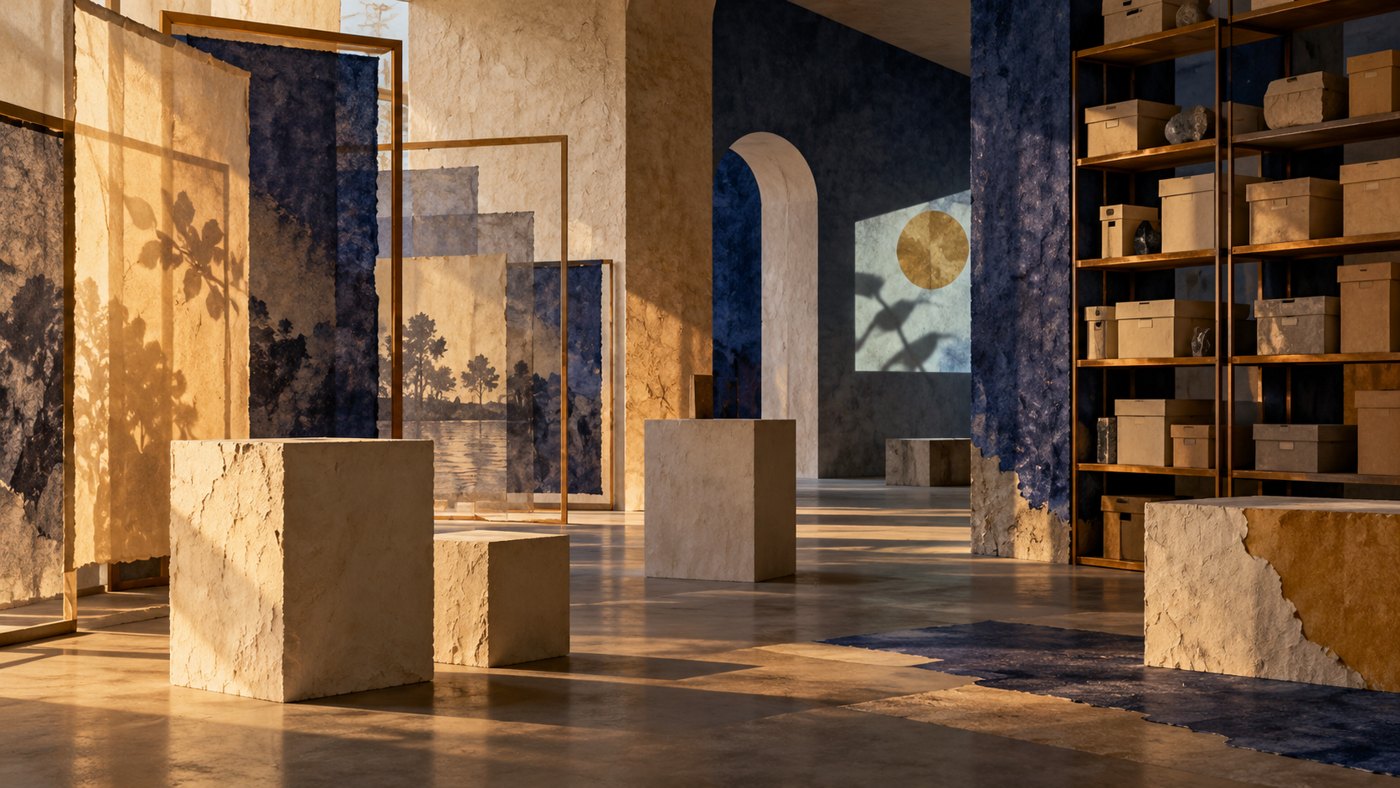
*Featured image: AI-generated conceptual illustration of an imaginary gallery; it does not depict the Lagos Biennial venue or any exhibited artwork.*
Why this matters
The Biennial connects a public cultural event with wider questions about who controls collections, whose histories receive space and how audiences gain access. Its film programme also gives screen culture a place in that discussion. The lasting value will depend on the quality of the encounters and the care behind any future institution.
Sources
- Punch, Naomi Chima, 31 October 2026 — fifth-edition dates and participation
- Lagos Biennial — current official opening and closing weekend programme
- Lagos Biennial — curatorial statement and appointments
- Lagos Biennial — Àkéte Collection plans
Topics: Lagos Biennial · Nigeria · Contemporary art · African cinema · Cultural memory
← All news & insights