
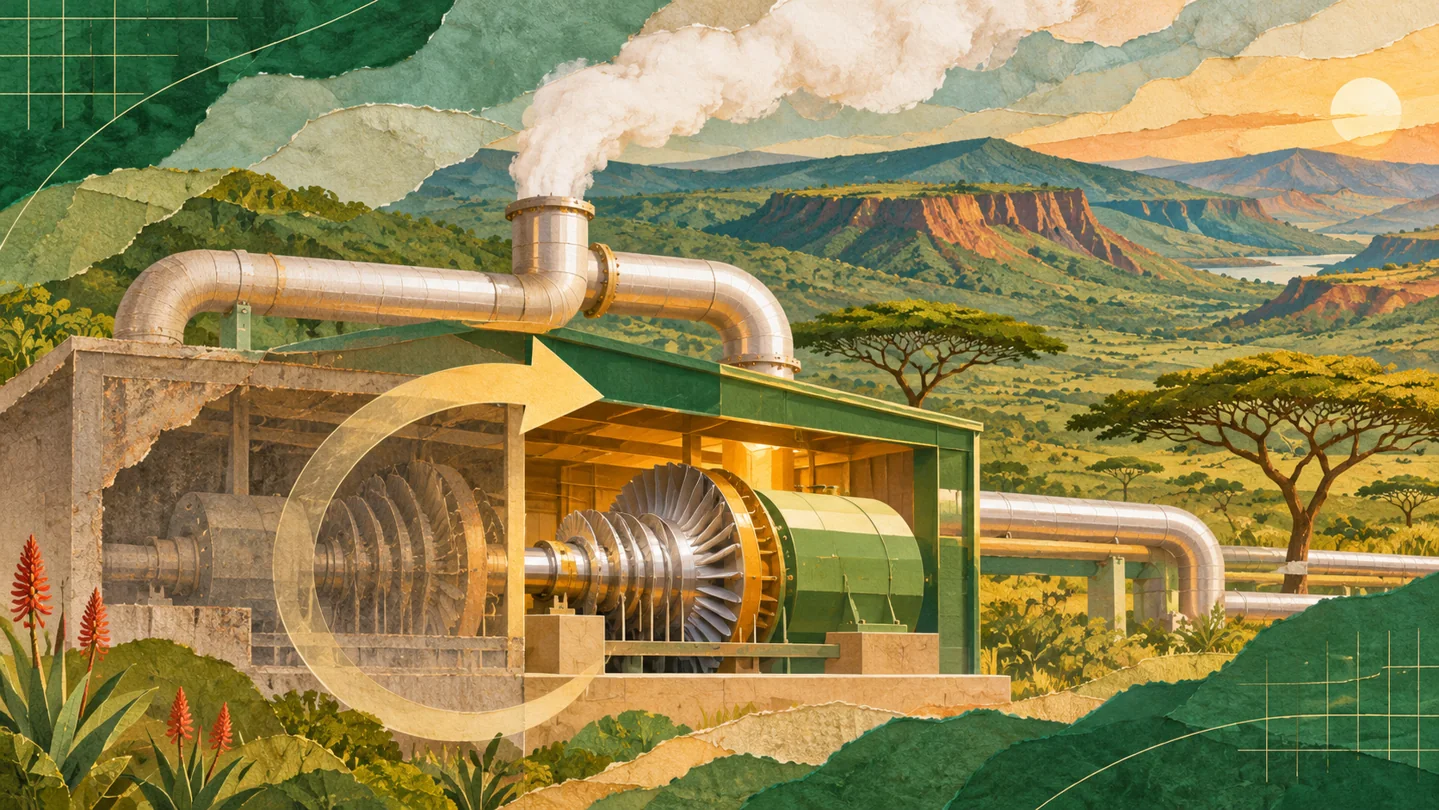
KenGen’s completed rehabilitation of the Olkaria I geothermal station offers a reminder that expanding Africa’s electricity supply is not only a story about new plants. Renewing equipment already connected to an energy system can also be consequential, particularly when demand is growing and reliability matters to businesses.
The Kenyan generator confirmed completion in its 29 October 2026 investment update. Reporting published since then has put the upgrade in the context of electricity imports and the need for dependable domestic generation. This is an assessment of that recent update, not a claim that a new commissioning ceremony took place today.
Completion does not settle every operational question
Business Daily’s report quotes KenGen managing director Peter Njenga saying rehabilitation of the 63 MW station was complete and that official commissioning was hoped for before the year ended. The report also describes reliability testing and regulatory arrangements.
That sequence matters. Finishing refurbishment, completing tests, formally commissioning a plant and recording sustained generation are related milestones, but they are not interchangeable. A headline about added capacity should not imply that every extra megawatt is continuously available to consumers.
KenGen’s investment statement reports KSh15.5 billion in infrastructure spending for the year to June 2026, up 14.3%. The figure covers the company’s investment programme; it should not be presented as the standalone price of this one rehabilitation project.
What was renewed
ThinkGeoEnergy’s 30 October account describes the station’s move from a previous 45 MW capacity to approximately 63 MW. It identifies new turbines and generators within the rehabilitation of three units and places the work within a programme that began in 2023.
The engineering task is therefore different from developing an entirely new geothermal field. Existing structures and equipment impose practical constraints. Replacement machinery has to function within those constraints, and the steam supply and associated systems also need to support the plant’s operating requirements.
KenGen’s project description sets out a design objective of 63.3 MW and a longer operating life. That page still carries an older construction-progress label. For present status, the later dated company statement confirming completion is the more relevant account; the older page remains useful for understanding the project’s original purpose.
Why capacity and reliability must be read together
The difference between a design figure and electricity delivered over time is essential to understanding infrastructure news. A rated capacity is a measure of potential output under specified conditions. Businesses experience something more immediate: whether electricity is available when they need to operate.
Our assessment is that the useful follow-up evidence will include generation performance, planned and unplanned outages, maintenance requirements and integration with the wider system. The existence of a refurbished plant alone cannot establish improved service at every shop, home or industrial site.
It also cannot establish an automatic reduction in customer bills. Generation costs, system investment and other decisions sit between an engineering upgrade and the price consumers pay. None of the material reviewed provides grounds to promise a tariff cut from this project.
An investment story with an operating test
KenGen’s broader statement links plant reliability with additional generation and geothermal-based industrial development at Olkaria. Those ambitions help explain why the upgrade matters, but proposed industrial activity should remain distinct from factories already operating or jobs already created.
For small enterprises, creative studios and venues, electricity reliability is part of the basic working environment. Editing systems, refrigeration, lighting and communications all depend on it. That is the business relevance of infrastructure performance, even when the immediate announcement is technical.
RIM’s earlier reporting on Uganda’s electricity access and reliability plans explores the same distinction between targets and delivery. At Olkaria, the next meaningful evidence will come from operation after rehabilitation, rather than the capacity number alone.
Why this matters
Reliable electricity supports livelihoods across Kenya, including manufacturing, digital services and creative businesses. Olkaria’s renewal shows why maintaining existing infrastructure deserves attention alongside new construction. The public benefit should be assessed through dependable output and system performance. Rehabilitation completion is a material milestone, but it does not by itself prove cheaper bills, uninterrupted service or the delivery of every wider industrial ambition.
Sources
- KenGen: investment and completed rehabilitation, 29 October 2026
- Business Daily: Olkaria upgrade and commissioning status
- ThinkGeoEnergy: rehabilitation technical background, 30 October
- KenGen: original Olkaria I rehabilitation objectives
Topics: Kenya · KenGen · Geothermal energy · Electricity · Infrastructure
← All news & insights