
Gimistory is due to begin its 2026 programme in Cayman Brac on Sunday, 1 November, before taking storytelling to communities on Grand Cayman during the week. The festival’s return offers a meeting point for Caymanian performers, international guests and audiences interested in hearing stories shared aloud.
The Cayman National Cultural Foundation’s programme gives the festival dates as 1–6 November and the theme as Island of Dreams. It describes free admission and names Jamaican storyteller Dr Amina Blackwood-Meeks among the international guests, alongside performers from the Royal Irish Academy of Music facilitated by CayMusicA.
The programme is scheduled, rather than reviewed here. This report does not claim that the opening performance has already taken place or describe an audience response.
### A route through local communities
After Cayman Brac’s Aston Rutty Centre on 1 November, the organiser lists George Town’s Cardinal Avenue on 3 November, East End’s Heritage Park on 4 November, West Bay on 5 November and a concluding Duppy Story Night at Pedro St. James on 6 November.
The East End event page confirms that stop’s venue and date. Explore Cayman’s current listing also sets out the five-location route. The programme therefore extends beyond a single central performance space, giving different communities an opportunity to encounter the festival.
Visitors should confirm the specific event’s arrival and performance times with CNCF. Published listings do not consistently distinguish opening times from the start of storytelling, and an older Radio Cayman announcement gave a general evening start that differs from later information for Cayman Brac.
### The people and traditions in the programme
Radio Cayman’s 15 October preview describes a mix of storytelling, music and local food, together with planned school visits intended to introduce younger audiences to oral traditions. It is advance reporting, not evidence that those visits or performances have been completed.
The announced Jamaican participation makes the festival relevant to a wider Caribbean audience, while the local performers keep the programme rooted in the host communities. International exchange and local cultural expression can support one another when the audience can recognise both the visiting voice and the setting in which it is heard.
RIM’s analysis is that live storytelling offers something distinctive for audiences accustomed to receiving stories through screens. The performer and listeners share time and space; a pause, gesture or change of tone can become part of the experience. Those qualities can encourage attention to how a story is told, alongside what happens in it.
### Keeping cultural work accessible
The foundation’s account of its role places the preservation and development of Caymanian cultural expression within a broader programme of arts, education and support for creative work. Gimistory belongs within that institutional context, rather than standing only as an isolated visitor attraction.
Free admission removes one immediate cost, although families still have to consider transport, timing and other practical arrangements. A travelling community programme can help with access, but its reach should ultimately be assessed through the people able to take part, not assumed from the number of venues announced.
For schools and families, a useful follow-up could be to discuss a story afterwards, compare different versions or ask an older relative about a tale they remember. These are possible ways to extend the encounter; they are not activities that RIM claims the festival has delivered.
### Relevance for screen storytellers
For filmmakers, podcasters and other creators, oral performance can prompt useful questions about voice and audience. Which details need explanation? What can remain implied? Where does the listener need time to imagine? Those questions travel between media even though a live performance and a recording use different techniques.
Recording or adapting someone’s performance also requires a conversation about consent and rights. An invitation to listen should not be treated as permission to reproduce a story or use a performer’s work commercially.
The audience-first approach connects with RIM’s guidance on planning a film screening: the venue, timing and relationship with the community help shape the experience. During Gimistory’s scheduled week, the immediate opportunity is to attend a local event, check the organiser’s latest details and hear the stories on their own terms.
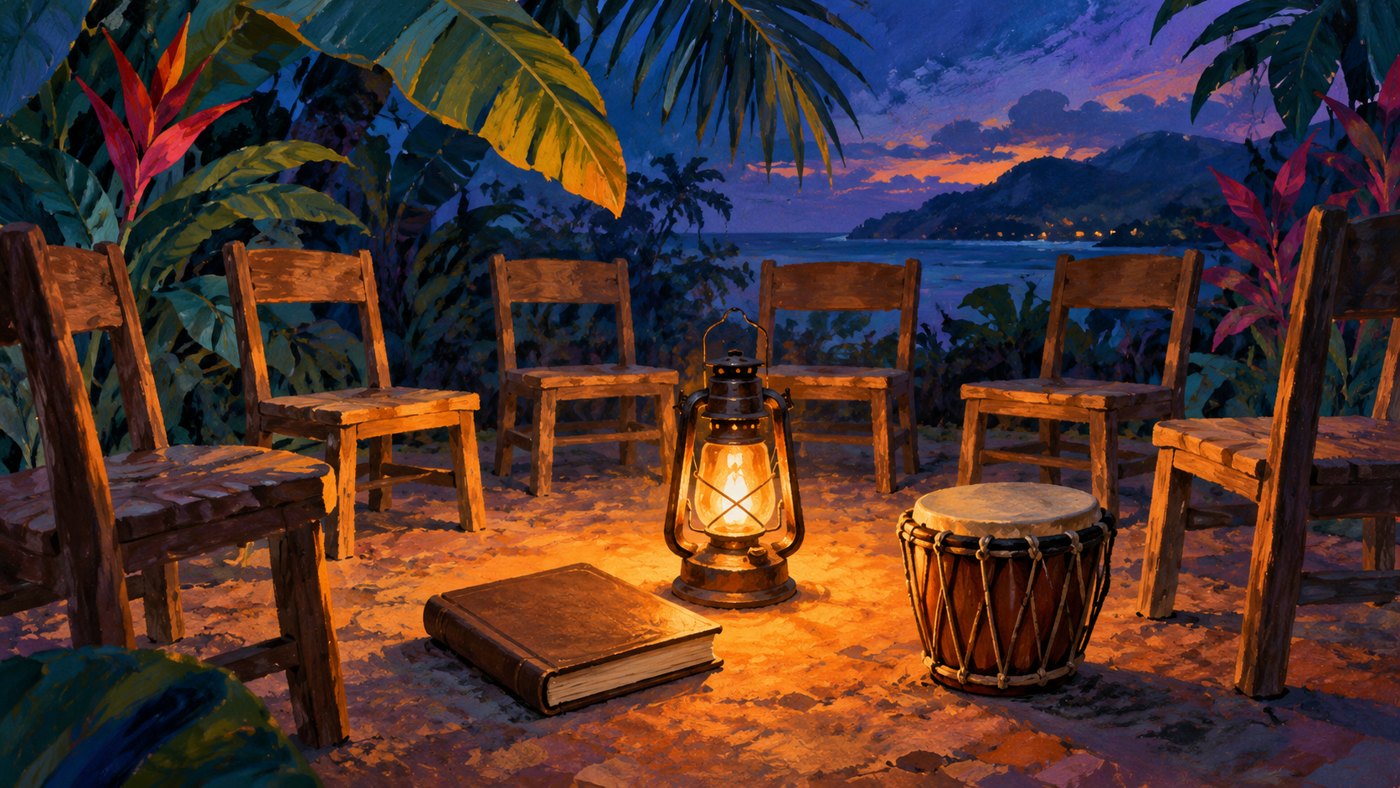
*Illustration: an AI-generated conceptual storytelling setting; it depicts no actual Gimistory performance or venue.*
Why this matters
Oral storytelling is one way communities transmit humour, memory and cultural expression between generations. Gimistory’s local route and international guests create an opportunity for exchange that includes a verified Jamaican connection. For African-heritage and Caribbean diaspora audiences, the programme also offers a reason to consider how stories live through performance, rather than only through published or recorded versions. The practical priority for anyone attending is to confirm the exact venue and start time with CNCF because published timing information varies.
Sources
- CNCF: Gimistory programme and George Town listing
- CNCF: Gimistory East End listing
- Explore Cayman: Current Gimistory route and event information
- Radio Cayman: Festival preview, 15 October 2026
- CNCF: Cultural preservation, education and institutional role
Topics: Cayman Islands · Gimistory · Caribbean storytelling · Jamaica · Oral heritage · Culture
← All news & insights