
Gabon and China announced closer diplomatic ties on 6 November 2026, with Gabon using the visit to press for more investment in processing natural resources at home. Chinese President Xi Jinping met Gabonese President Brice Clotaire Oligui Nguema in Beijing. China’s foreign ministry said the two sides issued a joint statement setting out the elevated relationship.
The diplomatic announcement covered a broad agenda. Reuters reported that the two governments pledged deeper cooperation in mining and security. Gabon’s presidency gave a more specific account of the economic priorities discussed in a separate meeting with Chinese Premier Li Qiang. It said Oligui Nguema sought increased investment in mining, local processing, fisheries and training. According to that account, Li expressed China’s willingness to support local transformation and closer energy cooperation.
What the industrial announcements cover
Agence Gabonaise de Presse reported on 6 November that Gabon and South Manganese Investment Limited signed a memorandum of understanding for a proposed manganese processing investment linked to M’Bembélé in the Ndjolé area. The agency cited a ministerial source and put the proposed investment at 116.7 billion CFA francs. It described plans for mineral beneficiation and supporting energy and logistics infrastructure.
That figure is attached to a reported memorandum. It should be read at the stage the agency describes. Further reporting on financing, construction and commissioning would be needed to establish when investment turns into operating capacity and what the final scope will be.
A separate item from the visit illustrates another part of the challenge. On 5 November, Gabon’s presidency said Gabon, Eramet Comilog and Sinohydro had signed a letter of intent to study power supply for a possible manganese alloy plant envisaged by Comilog near Libreville. This is a separate initiative from the reported South Manganese memorandum. Both concern manganese processing, but they involve different named parties and different immediate commitments.
The power study is significant because transforming ore adds work that must be done reliably after extraction. An industrial site needs a power arrangement that can support its operations, as well as transport and access to inputs and buyers. Work on those elements will help determine the timetable and economics of any plant.
What would show progress in Gabon
A processing strategy changes the questions readers can ask about a mining project. Export volumes and mineral prices remain relevant. So do the facilities that might handle the material locally, the people trained to operate them, the businesses able to supply them and the terms on which finished output reaches customers.
For Gabonese suppliers and workers, a concrete milestone could be a confirmed procurement process or a published training programme tied to a project timetable. For communities near a development site, disclosures about land, environmental assessment and infrastructure plans would make the project easier to follow. These are questions raised by the scale of the proposals, without implying that any particular approval or consultation has already occurred.
Gabon’s effort to keep more stages of production at home also connects to the broader diversification debate. RIM previously covered Gabon’s growth prospects and the role of skills and public finance. The Beijing announcements put a specific industrial pathway into that discussion. A lasting contribution would depend on whether activity extends to local firms and skills that can support more than one project.
The two governments have signalled a direction for cooperation. The memoranda, studies and diplomatic commitments each represent a different step. Following them separately will make it easier to assess what is actually financed, built and operated in Gabon, and who gains access to the work.
For readers tracking the relationship, that distinction also makes future announcements easier to evaluate. A signed financing agreement would answer a different question from an environmental decision, a procurement award or a commissioning date. The November visit provides the starting record against which those milestones can be compared.
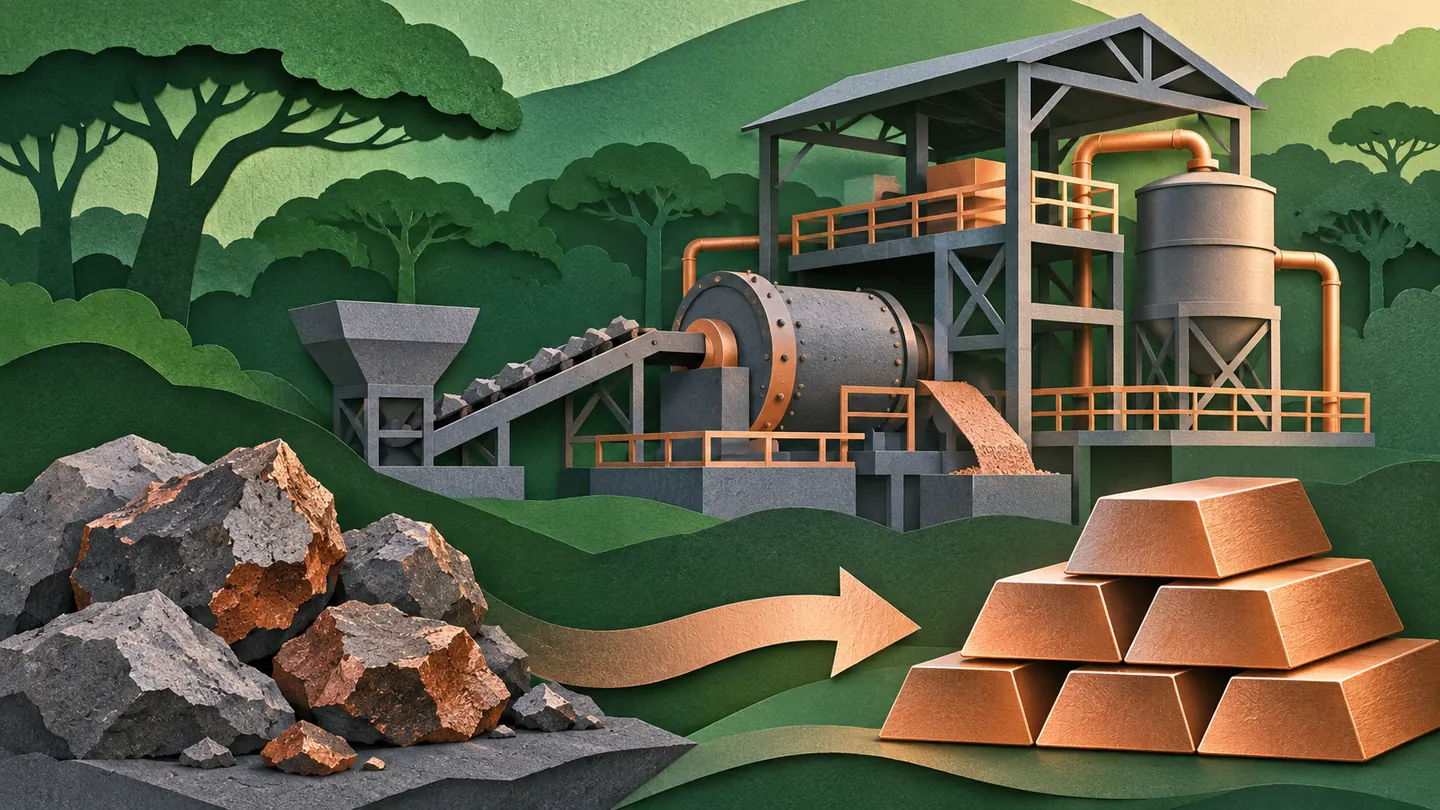
*Illustration — AI-generated conceptual artwork about turning mineral ore into processed material.*
Why this matters
Processing minerals locally could change where jobs, skills and supplier opportunities arise. Gabon’s discussions with China put that ambition alongside practical requirements for power and logistics. For people in Gabon and the diaspora, the meaningful follow-up is whether proposals secure financing, move through approvals and create work that local businesses and workers can access.
Sources
- China Ministry of Foreign Affairs — Xi and Oligui Nguema talks
- Gabon Presidency — Oligui Nguema and Li Qiang meeting
- Agence Gabonaise de Presse — South Manganese memorandum
- Gabon Presidency — 5 November Shanghai agreements
- Reuters — Bilateral ties elevated
Topics: Gabon · China · Manganese · Industrial policy · Diplomacy
← All news & insights