
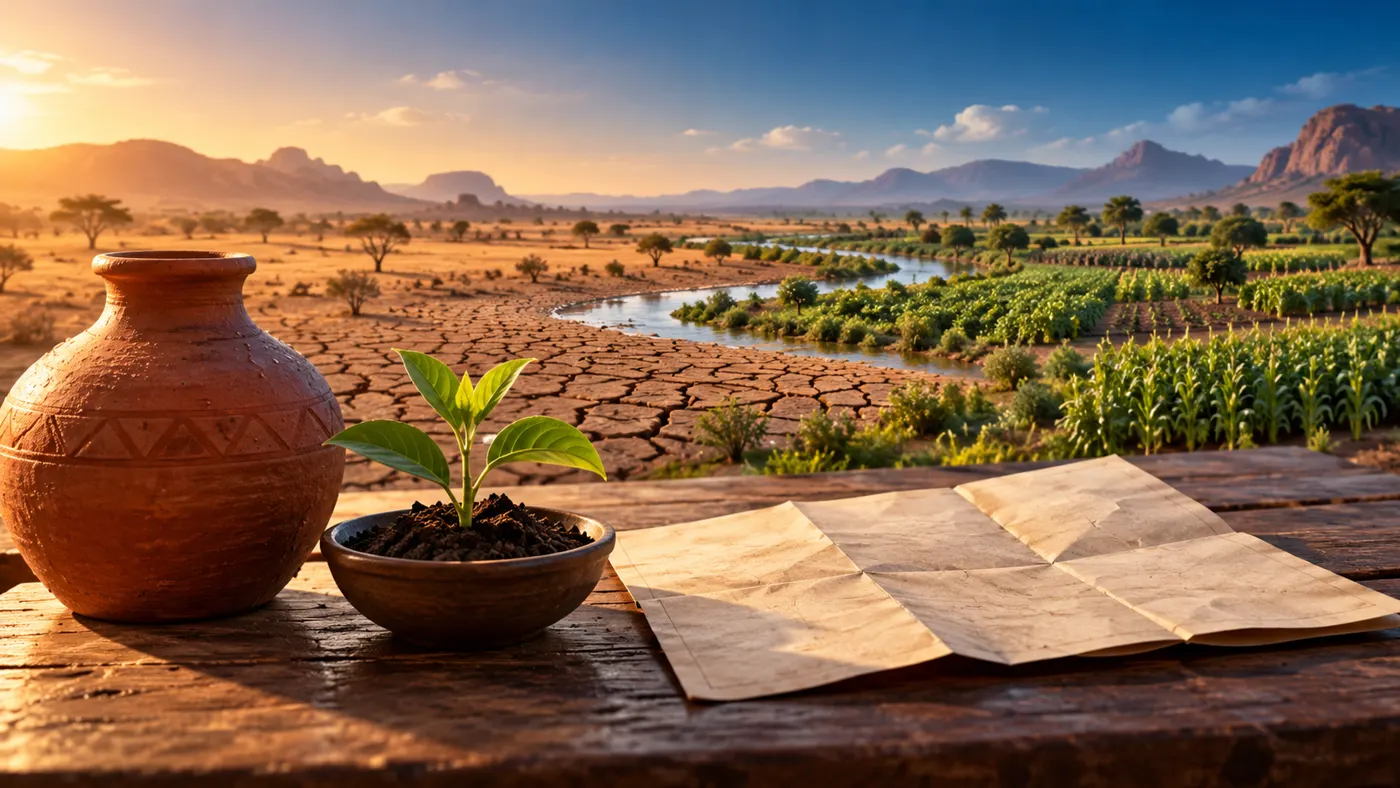
When a harvest fails or floodwater repeatedly reaches a home, moving may become part of a household’s response. Planning for that possibility requires more than a border policy: it involves livelihoods, public services and decisions about where people can live safely.
That is the context for an ECOWAS update published on 30 October. The commission says its climate and migration working group met in Abuja from 27–29 October to advance regional cooperation on human mobility linked to environmental change.
The meeting, convened through the Migration Dialogue for West Africa, brought together member-state representatives, regional institutions, development partners and youth. Its work includes developing a 2027–2028 plan, supporting national climate and adaptation priorities, and examining a possible regional Green Climate Fund project or readiness proposal.
A planning step, with delivery still ahead
The distinction between examining a proposal and obtaining funding is important. The commission’s update describes work on priorities and feasibility; it does not announce an approved regional Green Climate Fund award.
Likewise, a two-year work plan needs to become specific enough for communities to understand what will change. Useful questions include which institutions will lead, what resources are available and how people affected by environmental pressures will help shape the response.
Those are tests of future implementation, rather than findings that this meeting has already met them. The immediate development is an attempt to connect climate planning and mobility planning more closely.
Read the projections carefully
The World Bank’s Groundswell Africa material, published in 2022, provides background to the scale of the issue. It projects that West African countries could see up to 32 million internal climate migrants by 2050.
That is a scenario-based projection, not a count of people currently displaced. It concerns movement within countries, rather than 32 million people necessarily crossing international borders. The Bank also finds that concerted climate and development action could substantially reduce the projected scale.
Its regional analysis describes a long history of trade, pastoral movement and seasonal migration. That context matters: movement in West Africa did not begin with the current climate debate, and environmental pressures interact with existing ways of earning a living.
People need options, including the option to stay
The International Organization for Migration’s 2026 report chapter on climate mobility argues that responses remain too reactive and disconnected from longer-term adaptation planning. It places local and community action at the centre of the discussion.
This helps explain why a mobility plan should not be judged simply by whether movement increases or decreases. A family may want support to remain where it lives. Another may need a safer way to relocate. Counting journeys alone cannot establish whether either household has gained a meaningful choice.
The IPCC’s Africa assessment also notes that much observed climate-related migration and displacement happens within countries or between neighbouring countries. Reporting that treats every climate-mobility discussion as a story about migration to Europe misses much of the regional reality.
What accountability could look like
A practical next step would be publication of the work plan with clear responsibilities and ways to assess progress. Communities need to know how priorities will be chosen, while local authorities need to understand what support is realistic.
For diaspora readers, this also changes the questions worth asking about adaptation projects. Beyond the headline budget, who is involved in decisions? Does a proposal respond to the needs of people who remain, people who move and the communities receiving them?
For journalists and documentary makers, the human story requires similar care. RIM’s story-focus approach is relevant to work that begins with people’s circumstances rather than forcing every experience into a single dramatic narrative.
The Abuja discussions are a planning development, not a new immigration permission or individual route to residence. Their significance will depend on whether regional coordination produces useful, accessible support where environmental pressures are already affecting everyday choices.
Why this matters
For West African communities and diaspora families, climate mobility is about livelihoods, safety and the ability to make informed choices. Linking adaptation and mobility can help governments plan beyond an immediate emergency, but a meeting or proposed funding route is only an early step. Readers should watch for the published work plan, named responsibilities, community participation and verified funding decisions. Projections should inform preparation without being presented as inevitable outcomes or current displacement totals.
Sources
- ECOWAS — regional action on climate-related human mobility, 30 October 2026
- World Bank — Climate Migration in Africa: How to Turn the Tide, 5 January 2022
- IOM — World Migration Report 2026, chapter 6: local and community action
- IPCC — Sixth Assessment Report, Working Group II, chapter 9: Africa
Topics: ECOWAS · West Africa · Climate mobility · Migration · Climate adaptation · Diaspora
← All news & insights