
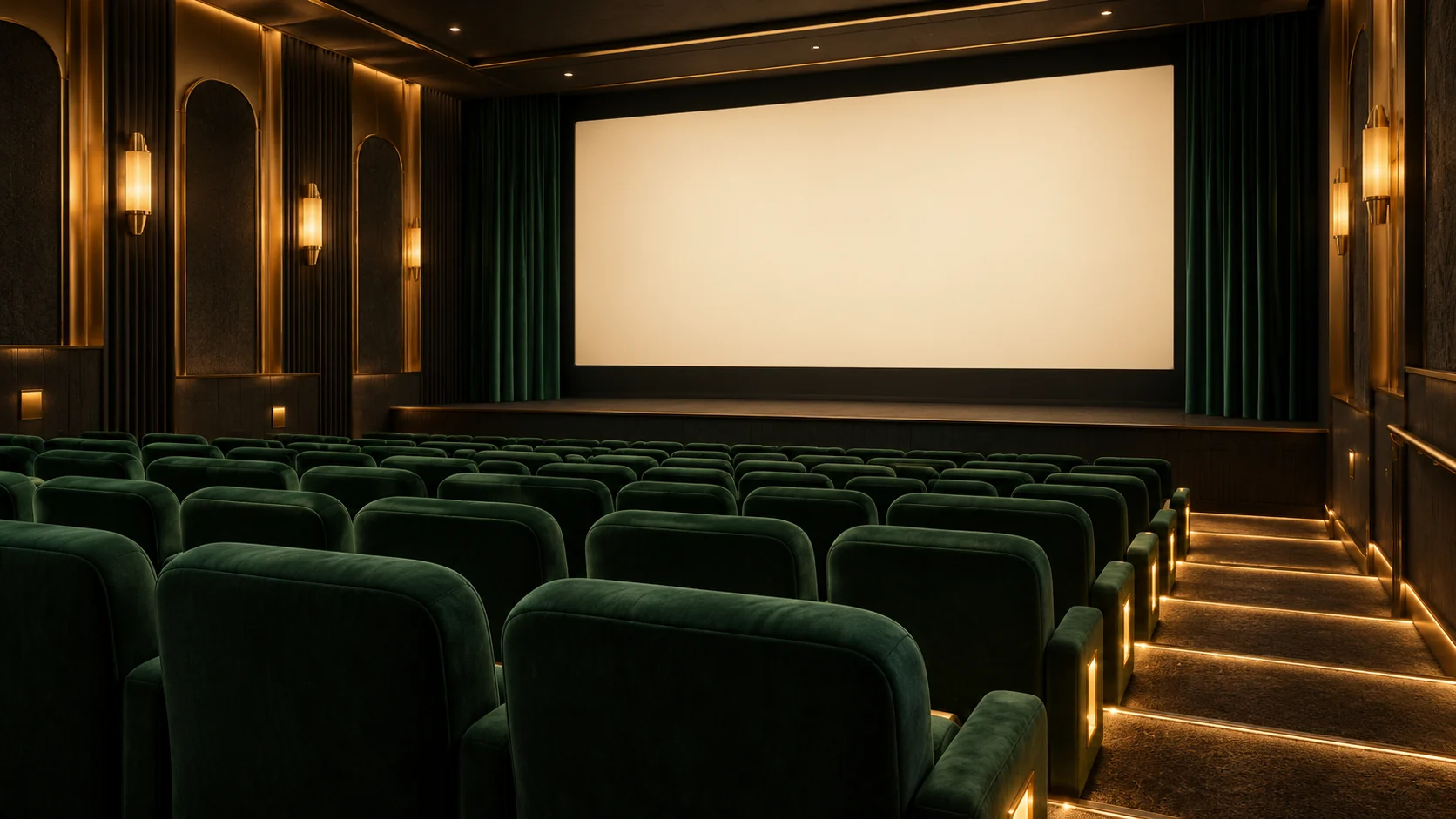
A permanent address can change how a film finds its audience. With the opening of EbonyLife Place London earlier this month, African and Black cinema has another physical meeting point in the British capital. The question now is how an opening celebration can become a lasting habit of attendance.
The venue opened to invited guests on 8 October 2026, according to New African magazine’s launch report. This is an analysis of that development, rather than an announcement of a new opening today. Its significance reaches beyond a single building: it raises practical questions about access, programming and the relationship between African filmmakers and audiences abroad.
A place for more than one kind of story
The venue’s official website describes a destination combining cinema with dining, retail, art and events on Wandsworth Road in south-west London. Its Amani Auditorium is intended for screenings, premieres, conversations and learning activities. The advertised film interests include Nigerian productions alongside Black British, Caribbean and other diaspora storytelling.
That breadth matters. African cinema is not a single genre, and diaspora audiences do not share one taste. A comedy, a historical drama and a documentary ask different things of viewers. A regular programme can give those differences room to breathe, rather than asking one film or one special evening to represent an entire continent.
Euronews’ reporting on 13 October places Mo Abudu’s ambition in that wider context: making African stories and Black culture more accessible in London. The report describes a cinema, restaurant and boutique, and an ambition to bring visitors into contact with several creative forms.
Visibility is a starting point
A dedicated venue can make discovery easier, but its existence does not establish that a particular film has secured a release or found a commercially sustainable audience. Attendance, repeat visits, the range of films booked and the experience of independent producers will be better measures of its longer-term influence.
For a filmmaker, the useful questions are specific. Who programmes the screen? What materials are needed for consideration? Which audiences are likely to respond to the film? Are there opportunities for a discussion, an accessible screening or a partnership with a community organisation? Answers require direct conversations; they should never be assumed from a venue’s launch publicity.
For audiences, the equivalent questions concern the experience. Clear listings, realistic travel information, understandable booking arrangements and the chance to recommend a film to friends can all affect whether a first visit becomes a second. Representation gains practical value when people can actually take part.
The conversation after the credits
A shared screening also offers something that an individual viewing cannot automatically provide: a room in which people can exchange interpretations. A viewer may recognise a language or family relationship that another person encounters for the first time. Neither response is more legitimate; both can deepen the conversation.
That makes thoughtful introductions and well-moderated questions valuable. They can explain a film’s context without reducing its characters to cultural lessons. They can also invite newcomers into the experience without treating African audiences as a single, already-convinced group.
For organisers elsewhere in Britain, the development offers a case to watch rather than a formula to copy. Local audiences, venue costs and programming interests differ. RIM’s own approach to African film exhibitions begins with those practical relationships between a film, a host and an audience.
The opening is therefore best understood as an opportunity whose results will emerge through programming and participation. It does not remove the need for careful distribution work, or guarantee a route to screens for every African production. It does give audiences and creative businesses a visible place around which to ask more ambitious questions about what they want to watch next.
Why this matters
For African-origin audiences in Britain, a regular screen can help turn cultural recognition into participation. For filmmakers across Africa and the diaspora, venues such as this create potential points of contact with viewers and programmers. The useful next step is to follow the actual programme, support relevant films and assess the audience relationships that develop. RIM has no announced partnership or booking arrangement with EbonyLife Place London.
Sources
- EbonyLife Place London — official venue and cinema information
- New African, 12 October 2026 — report on the 8 October opening
- Euronews, 13 October 2026 — Mo Abudu’s new London cultural hub
Topics: African cinema · London · Diaspora · Film exhibition · Mo Abudu
← All news & insights