
A forthcoming New York exhibition of Aminah Brenda Lynn Robinson's work is drawing renewed attention to an expansive form of Black storytelling: books that become sculptural objects, textiles that carry histories, and familiar materials transformed into records of community life. The significance lies in what these objects preserve as well as how they are made.
Colossal's 4 November preview reports that Fort Gansevoort will present 25 works in *Beaded and Bound*, in collaboration with the Columbus Museum of Art. This is a preview of an upcoming exhibition, not a report from its opening or a claim that RIM has inspected the installation.
### Memory carried in materials
The museum's Aminah's World website describes Robinson's use of both conventional art supplies and everyday objects, including buttons, cloth, leather, shells and mechanical elements from music boxes. Such a material vocabulary invites viewers to consider the histories of objects that might otherwise seem too ordinary for sustained attention.
A button can fasten a garment, but in an artwork it can also contribute colour, rhythm or an association with domestic labour. That interpretive possibility does not establish the meaning of every button Robinson used. It does explain why a close encounter with materials can offer something different from reading a summary of an artist's themes.
The museum's biography and timeline places Robinson's childhood in Poindexter Village in Columbus, Ohio. It describes family teaching as an early foundation: her father introduced drawing and bookmaking, while her mother taught textile techniques. Robinson's practice developed through those skills and through attention to the lives of African Americans, both well known and less publicly recognised.
### Books that ask for a different kind of attention
Selvedge's 3 November article emphasises the long periods Robinson could spend developing handmade books. Its description includes volumes that unfold, layered covers and smaller books contained within larger ones. A book in this context is more than a neutral container for printed text.
That changes the questions a viewer might ask. How is a narrative encountered when it has folds, surfaces and depth? What can a material suggest before a word is read? How does a work hold both an individual's recollection and a community's shared experience?
These are questions for looking rather than a substitute for doing so. Images reproduced online can introduce a work, but they cannot fully convey its scale, construction or changing appearance from different angles. Readers should also distinguish seeing a published image from having permission to reproduce the artwork in their own projects.
Colossal highlights works associated with women in Poindexter Village and with the barbershop of Robinson's friend and mentor, artist Elijah Pierce. These subjects locate cultural history in relationships and shared places, rather than only in major public ceremonies.
### Check the dates before planning a visit
The published previews differ on the start date. Colossal gives 19 November, while Selvedge lists the works as on view from 20 November to 16 January 2027. RIM has not established whether those dates distinguish a reception from the regular exhibition opening.
Visitors should therefore confirm arrangements directly with Fort Gansevoort, at 5 Ninth Avenue in New York, before booking travel or assuming access on a particular day. The exhibition is forthcoming; the date discrepancy is not evidence that it has been cancelled.
### A legacy with continuing uses
The museum's biography also explains that Robinson left almost her entire estate to the Columbus Museum of Art and that her former home studio became a place supporting artists and writers. Preservation can therefore involve sustaining creative activity as well as caring for completed objects.
For African and diaspora storytellers, the broader lesson is about specificity. A neighbourhood, a family skill or a remembered gathering place can carry a larger history without losing its local identity. The task is to preserve the names, relationships and context that make that history intelligible.
RIM's coverage of Carter G. Woodson's restored home examines another way Black cultural memory enters public space. Robinson's forthcoming exhibition offers a different route through that question: material storytelling rooted in the lives of a particular community.
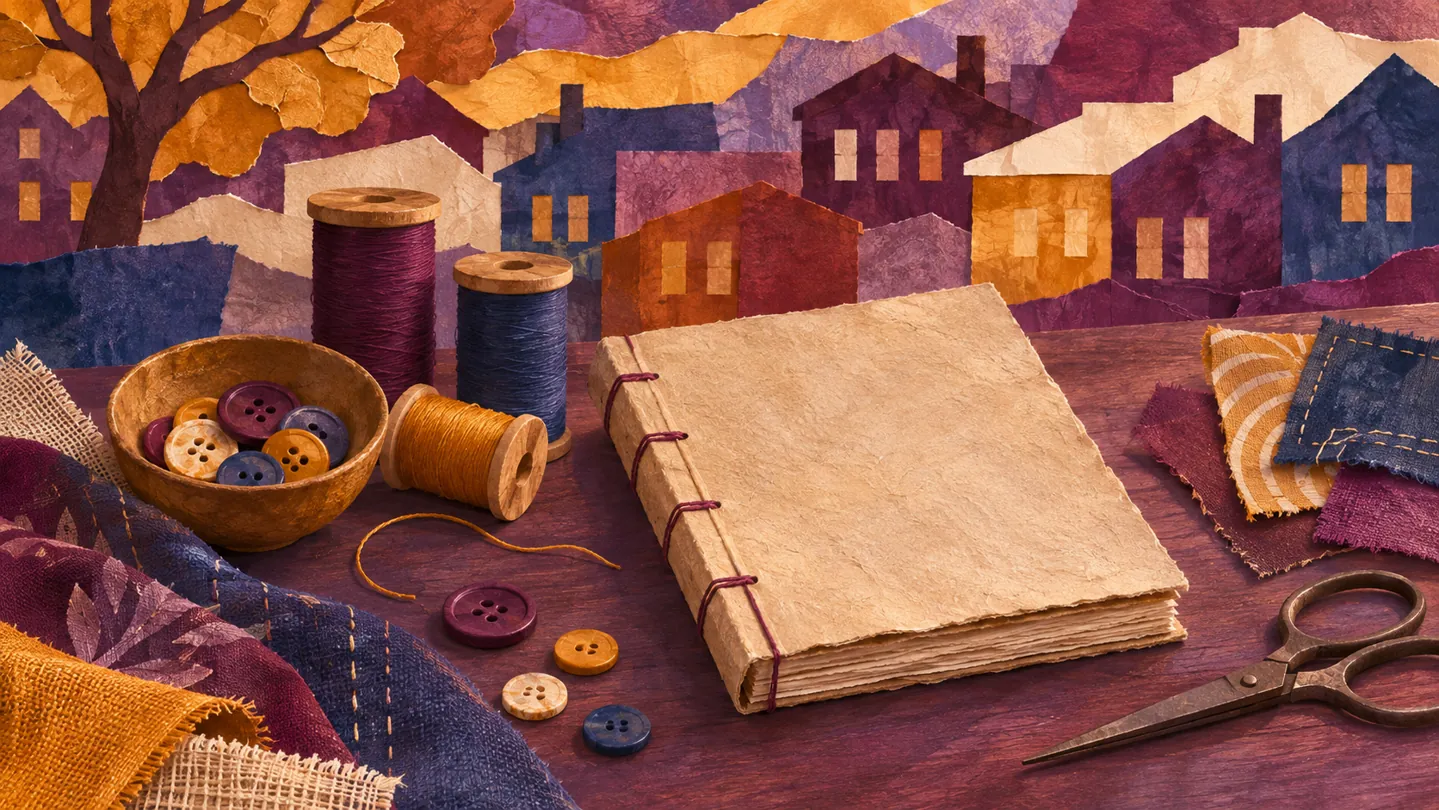
*Illustration: AI-generated generic craft materials and a blank book; this is not an artwork by Aminah Robinson or an exhibition photograph.*
Why this matters
African diaspora histories are preserved through everyday relationships and creative practices as well as official archives. Robinson’s work gives those forms of knowledge a public presence. The exhibition preview can help new audiences discover her practice, while accurate attribution and clear limits on visitor information protect both the artist’s legacy and readers’ plans. Her materials offer an approach to studying memory, rather than a style to reproduce without context.
Sources
- Colossal: Beaded and Bound exhibition preview, 4 November 2026
- Selvedge: books and exhibition preview, 3 November 2026
- Columbus Museum of Art: Aminah’s World
- Columbus Museum of Art: artist biography and timeline
- Fort Gansevoort: gallery address and contact
Topics: Aminah Brenda Lynn Robinson · African American art · New York · Columbus · Cultural memory · Textile art
← All news & insights